Publications and Data Presentations
Key peer-reviewed papers and conference presentations supporting Resilient's therapeutic vision.

Closing the loop in psychiatric deep brain stimulation: physiology, psychometrics, and plasticity
This review article lays out the rationale for trgeting constructs like cognitive flexibility, and why they offer a path to effecrtive treatments that cannot be achieved by traditional ideas like focusing on biomarkers of "depression" or "anxiety".

Neurostimulation to improve cognitive flexibility
Describes the rationale for targeting cogntiive flexibility (cognitive control) as a critical symptom underlying many mental disorders. Overviews some of the evidence that flexibility can in fact be changed, including our own work described in the next few articles.

Deep brain stimulation of the internal capsule enhances human cognitive control and prefrontal cortex function
Our first paper in which we proposed that stimulating the human internal capsule might improve cognitive flexibility, and tested that idea in a group of patients with severe depression and/or OCD. We showed that stimulation improves cognitive flexibility and increases the strength of known flexibility-related brain signals. This proof of concept, funded by DARPA's SUBNETS program, launched a decade of further research.

Closed-loop enhancement and neural decoding of cognitive control in humans
In a new patient cohort, we replicated our 2019 effect, and captured patient responses describing how enhancing their flexibility made them feel lighter, more focused, and less emotionally burdened. We demonstrated how to measure flexibility in real time, and that this measurement changes as we stimulate different parts of the internal cpasule (that it tells us when we are doing the right thing in the flexibility circuits).

DBS-Induced Improvement in Cognitive Control is Mediated by Theta Oscillations in Human Intracranial Recordings
In this presentation, not from our science team and from work done in parallel with the core Resilient pathway, an independent group exactly replicated our cognitive flexibility improvement in yet another cohort of patients.
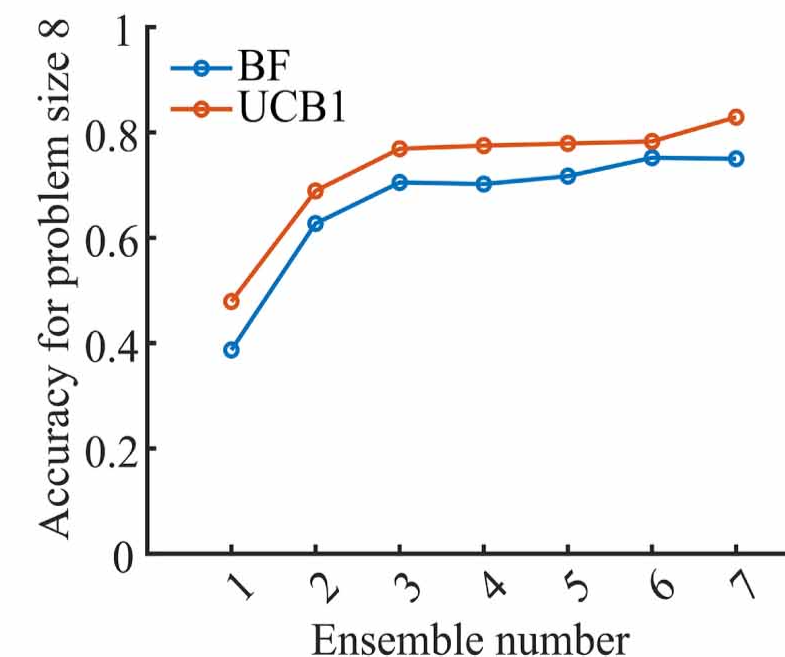
In silico development and validation of Bayesian methods for optimizing deep brain stimulation to enhance cognitive control
We developed an algorithm to use our real-time cognitive flexibility measurement to optimize stimulation settings to engage the flexibility circuit in individual patients. This paper describes our optimizers that form the basis of the Resilient therapy and shows that they work reliably across many clinical scenarios.

Striatal stimulation enhances cognitive control and evidence processing in rodents and humans
We developed a rat model of our human intervention and showed the same behavioral effect. We then used this rat model in the next few papers to improve our optimization engine and prove the clinical power of our cognitive flexbility enhancements.

Real-time Bayesian optimization of deep brain stimulation for personalized cognitive control enhancement
We ran our stimulation optimizers in real time across a cohort of animals, showed that we could enhance cognitive flexibility in all of them, and showed that the optimizer's choices matched or beat human hand-tuned settings.

Prefrontal cortical pathways mediating cognitive control enhancement from internal capsule stimulation
Most recently, we used our optimizers to enhance cognitive flexibility in a new group of patients with severe OCD, then applied advanced modeling and imaging to identify the exact target within the internal capsule that drives the effect. This prepared us to do precision-targeted device placements to ensure better therapy outcomes.

Cingulate-centered flexible control: physiologic correlates and enhancement by internal capsule stimulation
Using the models developed in the rat and human papers, we showed that the internal capsule stimulation that enhances cognitive flexibility correlates with symptom improvement, specifically in the depression patients from the 2019 paper that started it all.